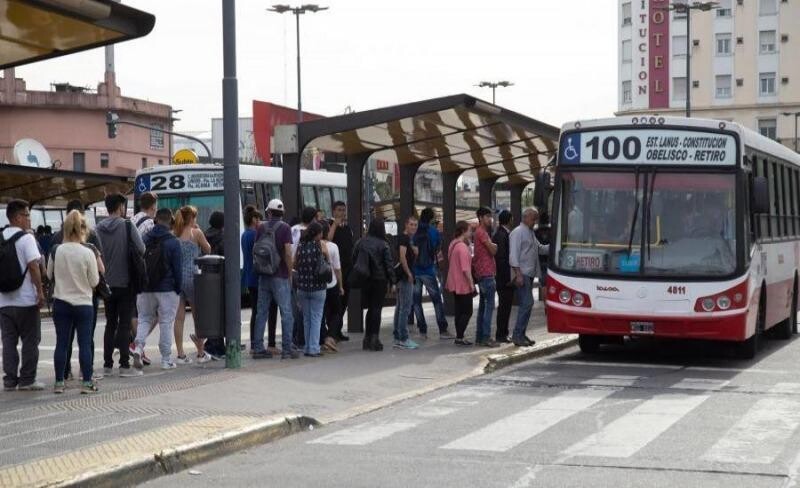
In fact, the previous reduction set the stage for this Thursday's chaos: passengers forced to wait longer, overcrowded units, and growing discontent on the street, just as new fares for the metropolitan area's public transport came into effect on April 1st. In this context, business chambers toughened their tone and sent a letter to Minister of Economy Luis Caputo, warning that without cost updates and payment of overdue subsidies, they are not in a position to guarantee service or meet wage obligations. According to sector spokespeople, while the system still recognizes a diesel value close to January's parameters, companies are paying much more per liter, a mismatch that directly impacts daily operations. From the Casa Rosada and the Transport area, they responded that funds to cover wages had been transferred and sought to ease tensions. And there, as almost always, the final cost is not absorbed by officials, business owners, or unions: it is ultimately paid by the worker waiting at the stop, arriving late for their job, and once again confirming that the AMBA's public transport continues to function at the pace of a permanent crisis. The result was immediate: fewer units on the street, users crowded at key points, and a sense of disorder that once again exposed the fragility of a transport scheme that depends on a delicate engineering of subsidies, costs, and state transfers that always teeters on the brink of collapse. The crisis did not start today. On Tuesday and Wednesday, several companies had already cut their frequencies by around 30 percent. Against this backdrop, a meeting was called this morning at the Secretariat of Transport of the Ministry of Economy, with the presence of representatives from CEAP, CETUBA, CTBPA, and CEUTUPBA, in an attempt to prevent the conflict from escalating into a larger paralysis. The preliminary list of affected lines exceeded a hundred and included heavily used services in the metropolitan area. The new day of conflict in the AMBA's transport once again showed a familiar and increasingly irritating scene for millions of passengers: long lines at stops, packed buses, delays of several frequencies, and a system that groans under debated subsidies, soaring costs, and incomplete wage payments. When tariff policy, subsidies, and actual costs no longer align, the adjustment is not debated on spreadsheets but in the streets. The stance laid bare the heart of the conflict: companies maintain that the real price of fuel is far above the value recognized in the official structure, making the equation unviable. However, the official response was not enough to defuse the protest or reverse the users' anger, because, according to the union and business demands, the money either did not arrive in full or would not resolve the accumulated backlog. This scale explains why the impact was so strongly felt at stations, transfer centers, and main avenues, where the lack of frequency turned the daily commute into a true test of patience. The episode also reignited a deeper discussion: that of a system that, even with already active fare increases, remains tied to subsidies, audits, delayed payments, and official decisions that always push the limits. Based on this, it was decided that from midnight on Thursday the 9th, activity in non-compliant companies would be suspended. Since January, the Secretariat of Transport itself has been talking about comprehensive audits and the temporary withholding of funds from companies with detected irregularities. Among them, in different surveys, appeared lines 1, 2, 8, 9, 10, 15, 17, 20, 22, 24, 28, 33, 37, 45, 53, 59, 60, 70, 86, 91, 100, 111, 130, 152, and many others. In parallel, the fare kept rising, and the passenger was once again left in the worst position on the board: paying more, waiting more, and traveling worse. What happened this Thursday left an uncomfortable but evident conclusion. This preventive cut was explained by the sharp jump in diesel prices and the open discussion with the national government about updating the cost structure. The measure pushed by the Union of Tramway and Automobile Drivers (UTA) was not a uniform strike across the entire network, but rather a work stoppage in those companies that had not finished paying March's wages, enough to once again heavily hit daily mobility in the City of Buenos Aires and the conurbano. The union had warned that on the fourth business day of the month, there were still companies that had not canceled the full amount of wages.